If you've ever wondered what are AI tokens, here's the short answer: they're the smallest...
Explained
Tech jargon translated into plain English. Concepts, standards, and technologies explained without the unnecessary complexity.
Featured in Category
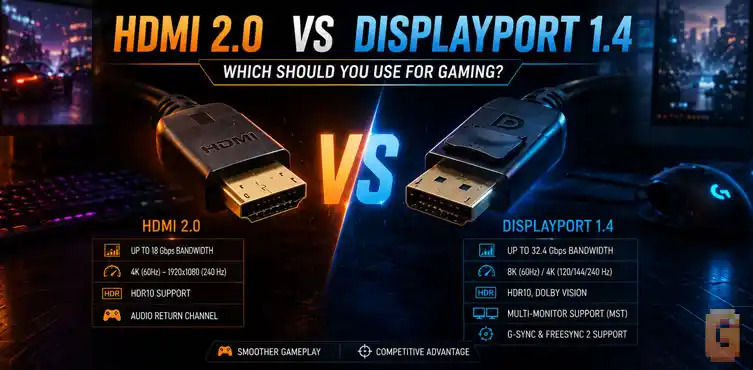
HDMI 2.0 vs DisplayPort 1.4: Which Should You Use for Gaming
If you're choosing between HDMI 2.0 and DisplayPort 1.4 for a PC gaming monitor, DisplayPort 1.4 is usually the better choice because it offers much...
Featured in Category
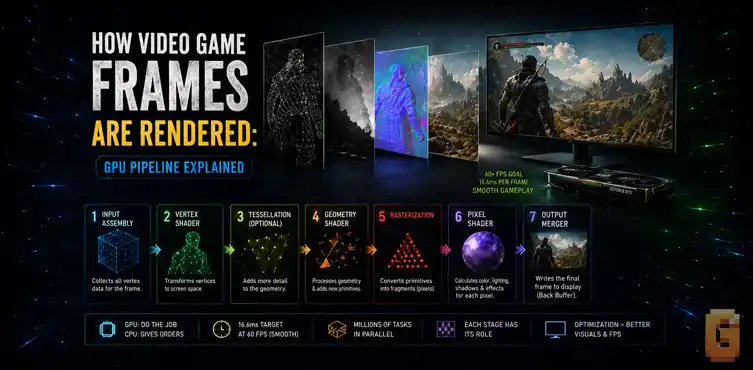
How Video Game Frames Are Rendered: GPU Pipeline Explained
Rendering a game frame is a coordinated handoff where the CPU calculates game logic, compiles instructions called draw calls, and sends them to the GPU....
Featured in Category
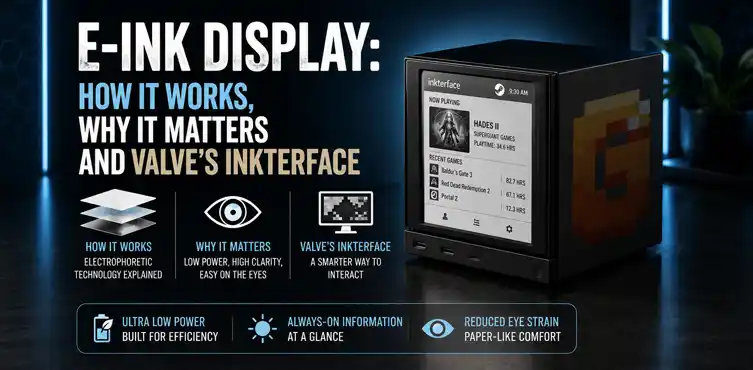
E-Ink Display: How It Works, Why It Matters and Valve’s Inkterface
An e-ink display uses tiny charged particles in microcapsules to create paper-like images that stay visible with zero power once drawn. Valve just open-sourced the...
Featured in Category
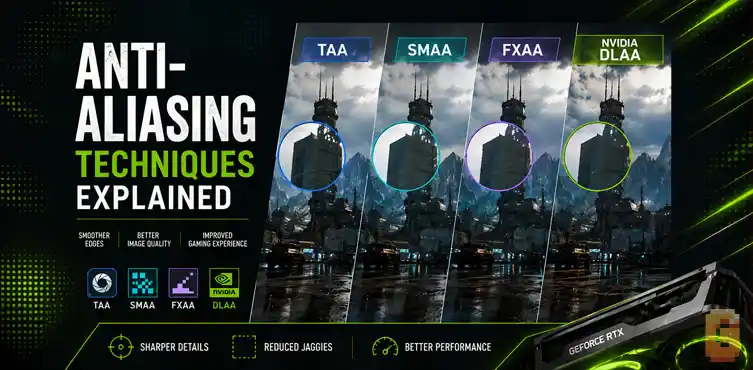
Anti-Aliasing Techniques Explained: TAA, SMAA, FXAA and NVIDIA DLAA
If you only remember one thing, remember this: modern anti-aliasing has split into two categories. Traditional methods like FXAA, SMAA, and TAA rely on shader-based...
Featured in Category
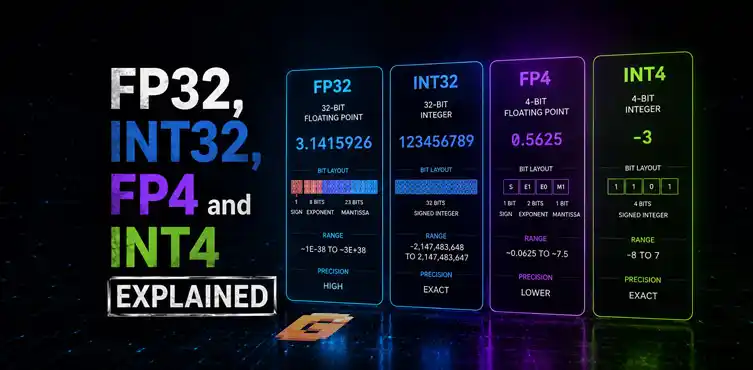
FP32, INT32, FP4 and INT4 Explained
FP32 and INT32 are traditional GPU data formats used for graphics, physics, and general computing. FP4 and INT4 are ultra-low-precision formats designed mainly for modern...