War of the Last Alliance Explained: Biggest Win, Biggest Tragedy

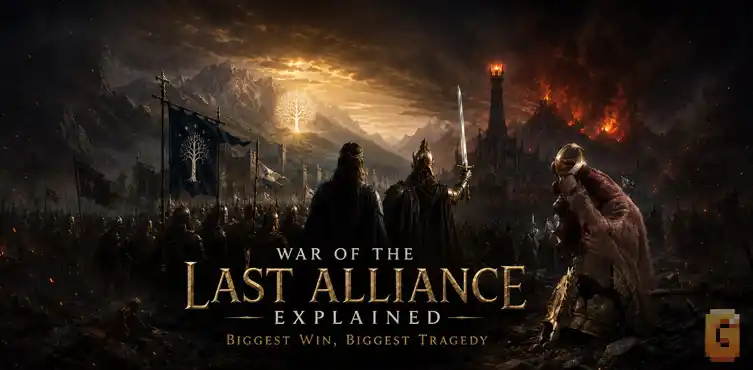

The War of the Last Alliance was the final conflict of the Second Age, where Elves and Men united to defeat Sauron after he conquered Minas Ithil. Although the Alliance won and ended Sauron’s physical rule over Middle-earth, Isildur’s decision to keep the One Ring turned that victory into the beginning of an even greater tragedy.
If you’ve only experienced The Lord of the Rings through Peter Jackson’s films, it can seem like the story begins with Sauron’s defeat on the slopes of Mount Doom. In reality, that famous scene is simply the final chapter of a much larger war.
The war of the last alliance explained isn’t just the story of Isildur cutting the One Ring from Sauron’s hand. It’s the story of the largest military campaign of the Second Age, a conflict that united the greatest kingdoms of Elves and Men, lasted more than a decade, included a seven-year siege of Barad-dûr, and permanently changed the future of Middle-earth. It’s also surprisingly difficult to learn.
Unlike The Hobbit or The Lord of the Rings, Tolkien never wrote a single continuous narrative of the War of the Last Alliance. Instead, its history is scattered across The Lord of the Rings, The Silmarillion, Unfinished Tales, and The History of Middle-earth. Understanding the complete story usually means piecing together events from several different books. This guide brings those fragments together into one accessible narrative. More importantly, it looks beyond the battle itself.
The War of the Last Alliance is often remembered as Sauron’s greatest defeat, but that isn’t what makes it one of Tolkien’s most compelling stories. Its lasting significance comes from the fact that the Alliance achieved everything it set out to do—except the one thing that mattered most. That single failure would shape every major event of the Third Age.
What Caused the War of the Last Alliance?
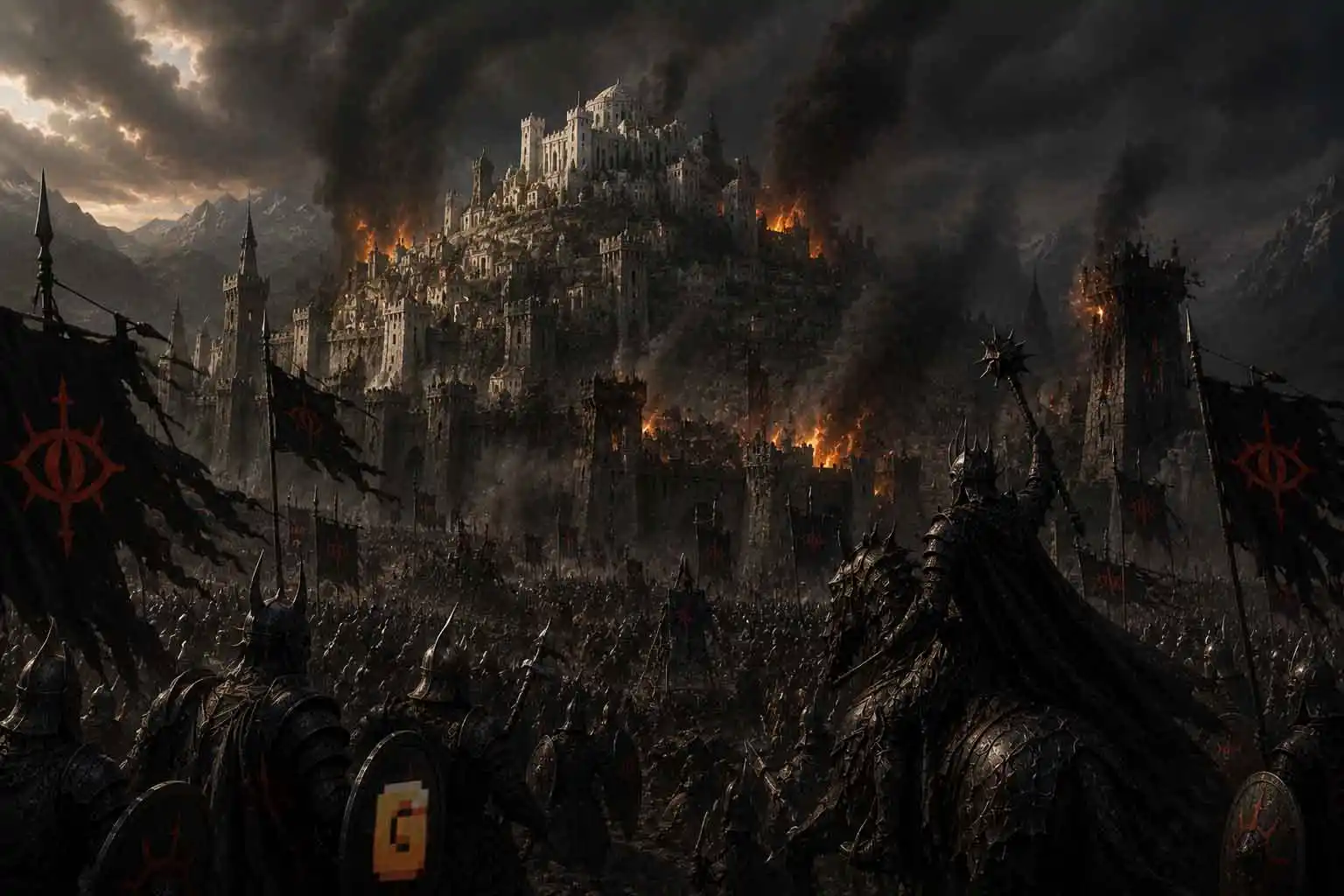
The War of the Last Alliance began because Sauron had become too powerful for any kingdom to defeat alone. Gil-galad and Elendil understood that unless they united their peoples, every free realm in Middle-earth would eventually fall.
By the late Second Age, Sauron had recovered much of the strength he lost after the downfall of Númenor. He rebuilt Mordor into a military powerhouse, restored Barad-dûr as his fortress, and expanded his influence across much of Middle-earth. One by one, independent kingdoms found themselves unable to resist his growing power.
The crisis reached its breaking point in Second Age 3429.
Sauron’s armies invaded Gondor and captured Minas Ithil, the eastern fortress established by Isildur. During the assault, the White Tree of Minas Ithil was burned, becoming a powerful symbol that peace in Middle-earth had finally come to an end. For Gil-galad, High King of the Elves, and Elendil, High King of the Dúnedain, the situation was clear. If they fought separately, Sauron would eventually destroy them one kingdom at a time.
Their only realistic chance of survival was to unite every force they could gather into a single army. That decision created the Last Alliance of Elves and Men, the greatest military coalition assembled since the First Age.
Preparations for war began in Second Age 3430, with armies gathering from across Middle-earth before beginning the long march toward Mordor. The campaign that followed would ultimately bring the Second Age to its end.
Who Fought in the Last Alliance?
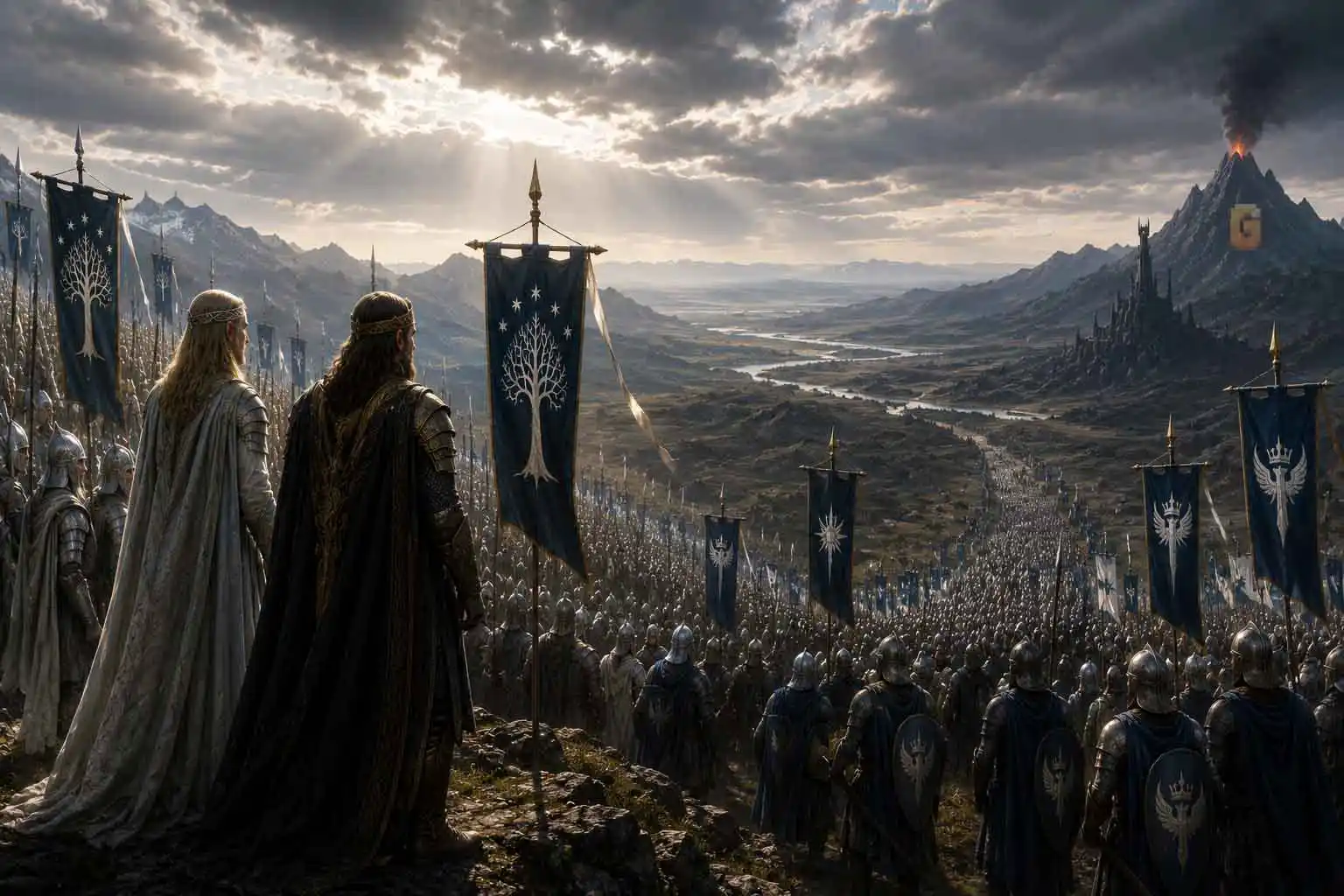
The Last Alliance united Elves, Men, and a smaller contingent of Dwarves against Sauron’s vast armies. It remains the largest alliance of the Free Peoples ever described during the Second Age.
The Forces of the Alliance
The backbone of the Alliance consisted of two great leaders. Gil-galad, the last High King of the Noldor in Middle-earth, commanded the Elven hosts. Elendil, founder of Arnor and Gondor, led the Númenórean kingdoms in exile. Alongside them marched many of the most recognizable figures in Tolkien’s legendarium, including:
- Isildur
- Anárion
- Elrond
- Círdan
Warriors from Khazad-dûm also participated in the campaign, although Tolkien provides relatively few details about the extent of Dwarven involvement compared to the Elven and Númenórean armies.
Despite fighting as one coalition, each kingdom retained its own leadership and military traditions. The Alliance succeeded because its rulers shared a common objective rather than because they merged into a single unified nation.
Sauron’s Army
Opposing them stood the greatest military force Sauron had assembled since establishing Mordor. His armies included:
- Orcs
- Trolls
- Human allies from Harad
- Easterlings from Rhûn
- Other servants loyal to Mordor
Tolkien never provides exact numbers for either side, making the true scale of the war impossible to quantify. What the surviving texts consistently emphasize instead is the unprecedented size of the conflict and the enormous losses suffered by both armies.
Why Is It Called the “Last” Alliance?
The Last Alliance earned its name because Elves and Men would never again unite in such overwhelming strength. It represents the final great partnership between the Elder Days and the Age of Men.
The title often causes confusion. It doesn’t mean Elves and Men never fought alongside one another again. Readers know that Legolas later joins Aragorn during the War of the Ring, and Elven warriors continue assisting the Free Peoples in smaller conflicts throughout the Third Age.
What made this alliance different was its scale.
Gil-galad brought together the remaining strength of the Elven kingdoms while Elendil united the Númenórean realms of Arnor and Gondor. Never again would Middle-earth see so many Elves marching under one banner beside so many kingdoms of Men. The war also marked a turning point in history.
Although the Alliance defeated Sauron, its victory came at an extraordinary cost. Several of the greatest rulers of the age would die before the campaign ended, and the surviving Elven kingdoms never fully recovered their former strength.
As the Third Age progressed, more Elves departed Middle-earth for the Undying Lands, while the race of Men gradually inherited responsibility for resisting Sauron’s eventual return.
That is why the word “Last” carries so much emotional weight. It doesn’t simply describe the final alliance of its kind. It marks the end of an era when Elves still stood at the center of Middle-earth’s history. By the time Frodo began his journey thousands of years later, that age had already become legend.
Battle of Dagorlad Explained
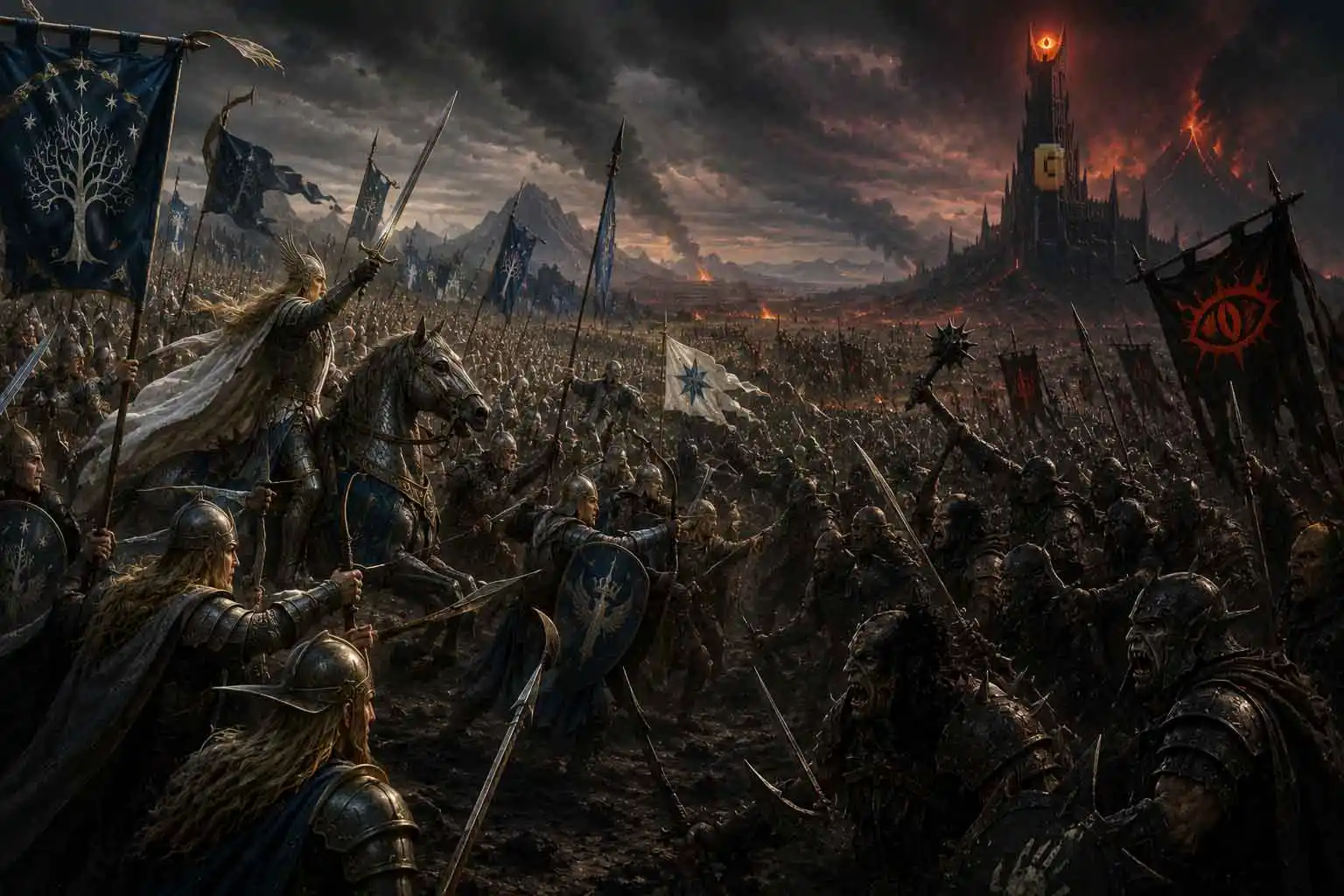
The Battle of Dagorlad was the decisive field battle that opened the road into Mordor. Without victory on the plains before the Black Gate, the Last Alliance would never have reached Barad-dûr or forced Sauron into his final confrontation.
After years of preparation, the combined armies of Elves and Men marched east toward Mordor. Their objective was straightforward. Defeat Sauron’s field army before it could retreat behind the defenses of Barad-dûr. The two forces met on Dagorlad, a vast plain stretching before the Black Gate. Tolkien leaves few tactical details, but the outcome is clear: the Alliance broke Sauron’s army and forced the survivors back into Mordor. It was one of the largest battles ever fought in Middle-earth.
Yet unlike famous conflicts such as Helm’s Deep or the Battle of the Pelennor Fields, Tolkien never wrote a full narrative describing each phase of the fighting. Instead, the story survives through scattered references across several works. That makes reconstructing the battle challenging, but it also highlights just how significant the victory was. Had the Alliance failed at Dagorlad, the war would have ended before it truly began.
Oropher’s Costly Mistake
One of the war’s most tragic episodes involved Oropher, King of the Woodland Realm. Rather than waiting for the coordinated attack planned by Gil-galad, Oropher led his army forward before the rest of the Alliance was fully engaged. The decision proved disastrous.
His warriors suffered devastating casualties, and Oropher himself was killed in the fighting. His son, Thranduil, survived the battle and inherited the Woodland Realm. Thousands of years later, readers would meet him again as the Elvenking in The Hobbit and the father of Legolas.
Oropher’s fate is a reminder that even the greatest alliance could not eliminate the cost of individual mistakes. Courage alone was not enough.
The Dead Marshes Were Once a Battlefield
The Battle of Dagorlad left scars that endured long after the Second Age ended. Over the centuries, the battlefield gradually became part of the Dead Marshes, the haunted wetlands crossed by Frodo, Sam, and Gollum during their journey to Mordor.
According to Tolkien, many of the fallen remained beneath the marshes. The ghostly faces beneath the water and the eerie lights described in The Two Towers are Tolkien’s way of making those who died at Dagorlad hauntingly present thousands of years later — a battlefield that never fully let go of its dead.
For readers revisiting Frodo’s journey, the Dead Marshes become far more haunting once their history is understood.
Those silent waters were once the front line of the greatest war of the age.
The Seven-Year Siege of Barad-dûr
After winning the Battle of Dagorlad, the Last Alliance trapped Sauron inside Barad-dûr. The fortress resisted for seven years, turning the final stage of the war into a long campaign of endurance rather than a swift victory. Many summaries jump directly from Dagorlad to Isildur taking the Ring. In reality, years passed between those events.
Barad-dûr was no ordinary fortress. Built with the power of the One Ring, it was designed to withstand conventional assault. Rather than attempting a reckless attack, the Alliance surrounded the Dark Tower and cut off Sauron’s ability to operate freely beyond Mordor.
The siege became a test of patience. Both sides suffered losses as the years stretched on. Supplies, morale, and leadership became just as important as battlefield victories. The extraordinary length of the siege also gives the war a much greater sense of scale than many adaptations suggest.
This was not a single battle. It was an extended military campaign that consumed years of Middle-earth’s history.
The Death of Anárion
The siege claimed another legendary leader before its conclusion. Anárion, Elendil’s younger son and co-founder of Gondor, was killed during the siege of Barad-dûr. His death is often overshadowed by the later deaths of Gil-galad and Elendil, yet it permanently changed Gondor’s future. From that point onward, Isildur became the surviving heir responsible for carrying his family’s legacy into the Third Age.
Who Died in the War of the Last Alliance?
The War of the Last Alliance ended in victory, but nearly every major triumph came at an enormous personal cost. Many of the greatest leaders of the Second Age never lived to see the peace they had fought to create.
Gil-galad
Gil-galad, High King of the Noldor, was among the most respected rulers remaining in Middle-earth. He personally confronted Sauron during the final battle outside Barad-dûr. He did not survive the encounter.
With his death, the line of the High Kings of the Noldor in Middle-earth effectively came to an end. It symbolized more than the loss of a single king. It marked the fading of an entire age of Elven leadership.
Elendil
Elendil also fell in the final confrontation with Sauron.
When he was killed, his legendary sword Narsil broke beneath him. Although shattered, the weapon did not lose its importance. Its broken shards would later become one of the most recognizable symbols in Tolkien’s legendarium before being reforged as Andúril, the sword carried by Aragorn during the War of the Ring.
Oropher
Oropher’s death came much earlier, during the Battle of Dagorlad. His decision to charge before the coordinated assault cost both his own life and many of his warriors. The Woodland Realm survived, but under entirely new leadership.
Amdír
Another Elven king who fell during the campaign was Amdír of Lórien. Although Tolkien provides relatively few details about his final moments, his death further weakened the strength of the Elven kingdoms that remained in Middle-earth after the war.
Anárion
Anárion never reached the final battle with Sauron. His death during the siege left Isildur as the sole surviving son of Elendil. Combined with the deaths of Gil-galad and Elendil, it demonstrated that the Alliance’s victory came at a staggering price.
How Was Sauron Defeated?
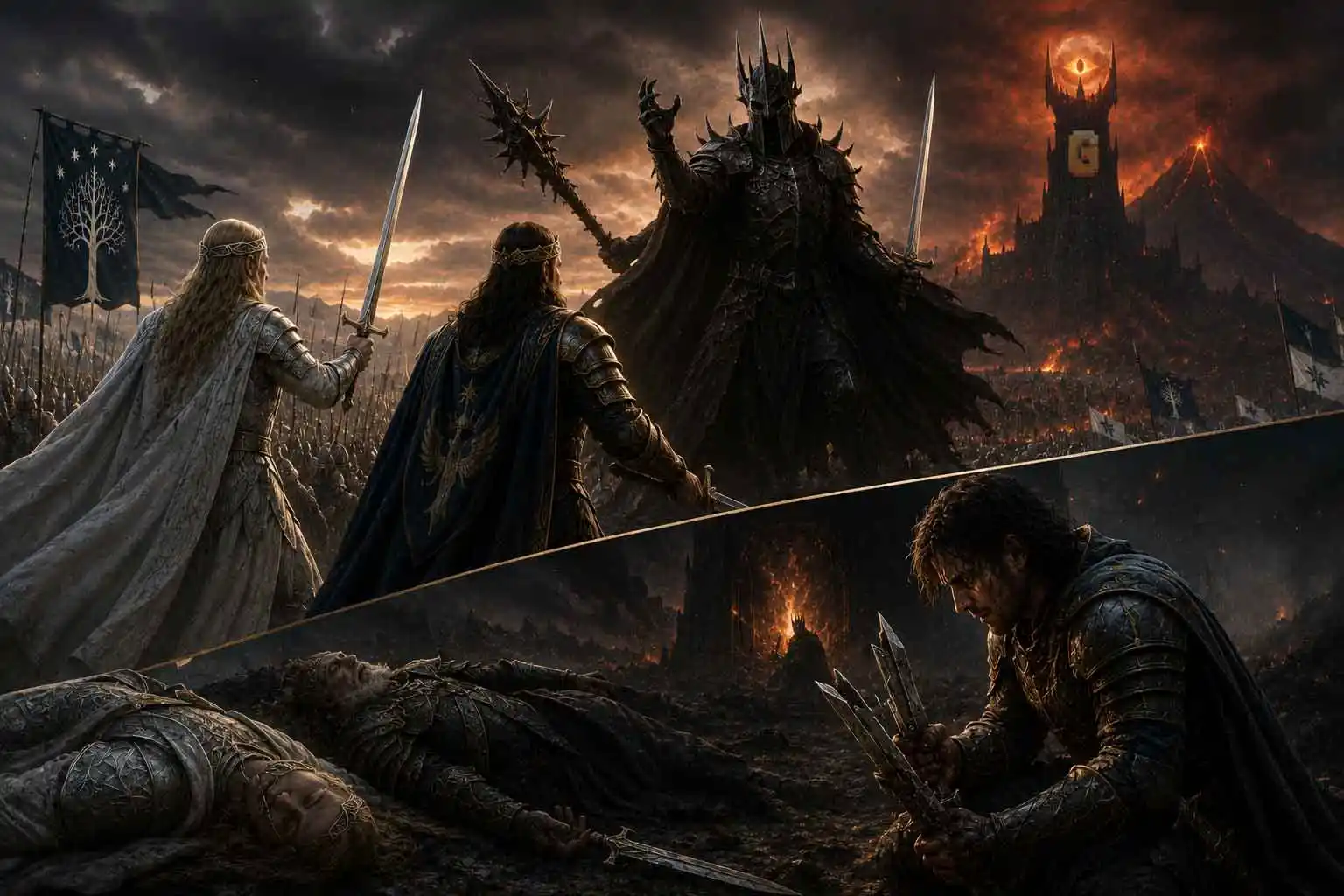
Sauron was defeated because Gil-galad and Elendil gave their lives fighting him, allowing Isildur to seize the opportunity to remove the One Ring from his hand. It was the combined sacrifice of the Alliance’s leaders—not Isildur alone—that ended the war.
After seven years of siege, Sauron finally emerged from Barad-dûr to confront the leaders of the Alliance himself. According to Tolkien’s account, Gil-galad and Elendil both fell fighting Sauron directly—each killed in that confrontation. After Elendil died, Isildur took up the broken shards of Narsil and used them to cut the One Ring from Sauron’s hand.
With the Ring removed, Sauron’s physical form collapsed. His spirit endured, but his immediate power was broken. This sequence is one of the most important distinctions between Tolkien’s writings and the simplified version many readers remember from adaptations.
Isildur did not single-handedly defeat Sauron in personal combat.
The victory belonged to the Alliance as a whole and was only made possible because Gil-galad and Elendil sacrificed their lives to bring Sauron within Isildur’s reach. The war was finally over. Yet the greatest decision of the entire conflict still lay ahead.
Why Didn’t Isildur Destroy the One Ring?
Isildur did not destroy the One Ring because he claimed it as compensation for the deaths of his father and brother. Tolkien also makes clear that the Ring had already begun exerting its corrupting influence, turning a moment of triumph into the beginning of a new age of darkness.
- Everything the Last Alliance fought for came down to a single choice.
- Thousands had died.
- Great kingdoms had emptied their armies.
- Gil-galad, Elendil, Anárion, Oropher, and Amdír were gone.
- Sauron lay defeated.
The One Ring remained.
At that moment, Isildur stood closer than anyone else in history had ever come to ending Sauron’s evil forever. Instead, he kept the Ring. In The Lord of the Rings, Isildur describes it as a weregild—a compensation for the deaths of his father Elendil and his brother Anárion.
From his perspective, the Ring had been won through immense sacrifice and belonged to him by right. Yet Tolkien’s legendarium also makes another point clear. The One Ring was never an ordinary prize. It was created to dominate the wills of others, and its influence began affecting those who possessed it almost immediately. Isildur’s decision cannot be understood simply as greed or arrogance. The Ring itself had already started working against the very people who had defeated its master.
That same corrupting pull is what Frodo recognizes centuries later in Gollum —understanding exactly what the Ring does to whoever carries it is why he chooses pity over the blade when he finally has Gollum at his mercy.
That is what transforms the ending from a straightforward victory into one of Tolkien’s greatest tragedies. The Last Alliance achieved the impossible. But because the Ring survived, so did the possibility of Sauron’s return. Centuries later, that possibility became reality.
Why the War of the Last Alliance Still Matters
The War of the Last Alliance matters because nearly every major event in The Lord of the Rings traces back to its outcome. It is the foundation upon which the entire Third Age is built.
Without this war, there is no broken Narsil waiting to be reforged. There is no lost One Ring hidden beneath the Misty Mountains. There is no return of Sauron. And there is no quest to destroy the Ring during Frodo’s journey.
Understanding the Last Alliance changes how you read Tolkien’s later stories. The War of the Ring is not a separate conflict. It is the unfinished business of the Second Age.
The Oathbreakers and Aragorn’s Inheritance
One of the war’s most enduring consequences involved the Men of the White Mountains. Before the campaign against Sauron, they swore an oath to fight beside Isildur. When the time came to honor that promise, they refused. Isildur cursed them for breaking their oath, declaring that they would find no rest until they fulfilled it. Their punishment lasted for thousands of years.
Only during the War of the Ring did their story finally come to an end, when Aragorn summoned the Army of the Dead to fulfill the ancient oath their ancestors had abandoned. It is one of Tolkien’s strongest narrative bridges between the Second and Third Ages. A promise broken during the War of the Last Alliance was finally redeemed thousands of years later by Elendil’s distant heir.
The White Tree’s Legacy
The White Tree burned during Sauron’s capture of Minas Ithil, but its story did not end there.
Before the city fell, Isildur had already rescued a seedling from the original White Tree, preserving a living symbol of Númenor’s royal line. That sapling became the ancestor of every White Tree that followed, including the withered tree standing in the Court of the Fountain when Pippin arrived in Minas Tirith during The Return of the King.
After Aragorn’s coronation, he discovered a new White Tree growing on the slopes of Mount Mindolluin and replanted it in the city, completing a symbolic journey that began with Isildur’s rescue thousands of years earlier. The survival of the White Tree mirrors the endurance of the kingdom itself: battered by war, diminished through the ages, yet never completely extinguished.
The End of the Elven Age
The Last Alliance also marked a turning point for the Elves. Although Sauron was defeated, the cost of victory permanently weakened the great Elven kingdoms. Gil-galad was gone. Many experienced warriors had fallen.
Over the centuries that followed, increasing numbers of Elves departed Middle-earth for the Undying Lands. Responsibility for resisting darkness gradually shifted to the race of Men. In many ways, the Third Age begins not with humanity’s triumph, but with the fading of those who had protected Middle-earth for thousands of years.
What The Rings of Power Season 3 Will Likely Show
If The Rings of Power continues following the major milestones of Tolkien’s Second Age, the War of the Last Alliance is the next defining event in the story. While the exact adaptation remains unknown, the series has already moved much closer to the conflict. Season 2 brought many of the key political and military threads closer together.
With Season 3 confirmed to be in production, many viewers expect the story to continue toward the Alliance’s formation and its war against Sauron. If that happens, audiences may see several of the conflict’s defining moments brought to the screen, including:
- The alliance between Gil-galad and Elendil.
- The march of the combined armies toward Mordor.
- The Battle of Dagorlad.
- The seven-year Siege of Barad-dûr.
- The deaths of Gil-galad and Elendil.
- Isildur taking the One Ring from Sauron’s hand.
Exactly how faithfully these events will follow Tolkien’s chronology remains to be seen. Like previous seasons, the series may condense timelines, combine characters, or adapt events differently for television.
For viewers discovering Middle-earth through the show, understanding Tolkien’s original version provides valuable context before the next stage of the story arrives.
Frequently Asked Questions
Did the War of the Last Alliance end the Second Age?
Yes. Sauron’s defeat marked the end of the Second Age and the beginning of the Third Age, even though the One Ring survived.
How long did the Siege of Barad-dûr last?
Seven years. Tolkien specifically describes the siege lasting seven years before Sauron finally emerged to confront the leaders of the Alliance.
Who actually defeated Sauron?
Gil-galad and Elendil gave their lives fighting Sauron directly. After they fell, Isildur used the broken shards of Narsil to cut the One Ring from Sauron’s hand, causing Sauron’s physical form to collapse.
Why didn’t Isildur throw the Ring into Mount Doom?
He claimed it as weregild for the deaths of his father and brother, while the Ring’s corrupting influence also affected his judgment.
Is the Battle of Dagorlad the same battle shown in the opening of The Fellowship of the Ring film?
Partially. The film compresses several events from the War of the Last Alliance into a short prologue rather than depicting the full campaign, the seven-year siege, or the broader history of the war.
Conclusion
The War of the Last Alliance was far more than the final battle of the Second Age. It was the greatest military alliance Middle-earth had ever seen, bringing together Elves and Men in a desperate attempt to stop Sauron before his power became unstoppable. They succeeded.
- The Battle of Dagorlad opened the road to Mordor.
- The seven-year Siege of Barad-dûr finally forced Sauron into open battle.
- Gil-galad and Elendil gave their lives to defeat him.
- Isildur cut the One Ring from Sauron’s hand.
Yet Tolkien never presents the ending as a simple triumph. The Alliance won the war but failed to destroy the source of Sauron’s power. That single decision allowed evil to survive long enough for history to repeat itself thousands of years later.
Viewed through that lens, the War of the Last Alliance is not simply the story of Sauron’s first defeat. It is the story of a victory that contained the seeds of its own undoing. That tragedy echoes through every page of The Hobbit and The Lord of the Rings, making the War of the Last Alliance not just one of Tolkien’s greatest battles, but one of the defining moments of his entire legendarium.
Sources and Further Reading
Tolkien, J.R.R. The Lord of the Rings. George Allen & Unwin, 1954–1955. (See “The Council of Elrond,” Appendices A and B.)
Tolkien, J.R.R. The Silmarillion. George Allen & Unwin, 1977. (See “Of the Rings of Power and the Third Age.”)
Tolkien, J.R.R. Unfinished Tales of Númenor and Middle-earth. George Allen & Unwin, 1980. (See “The Disaster of the Gladden Fields.”)
Tolkien, Christopher (ed.). The History of Middle-earth. Volumes 9 and 12. HarperCollins.
Tolkien Gateway — The most comprehensive online reference for Tolkien’s legendarium, including detailed entries on the War of the Last Alliance, its key figures, and the broader history of the Second Age.