Why Didn’t Frodo and Sam Kill Gollum at Emyn Muil?

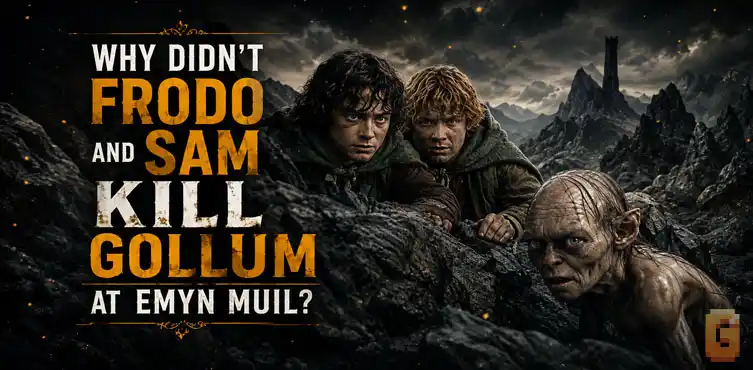

Frodo and Sam spared Gollum at Emyn Muil because Frodo felt real pity for the broken creature, they desperately needed him as a guide through unknown dangerous lands, and Frodo bound him with an oath sworn on the Ring itself. This choice wasn’t weakness — it was one of the most pivotal moments in the story.
If you’ve ever wondered why didn’t Frodo and Sam kill Gollum when they had the chance right there on the rocky cliffs, you’re not alone. That first direct contact at Emyn Muil is raw, tense, and full of “what if” energy. They had him overpowered. It would have been easy. But they didn’t. And that decision carries the whole quest forward.
What Actually Happens at Emyn Muil
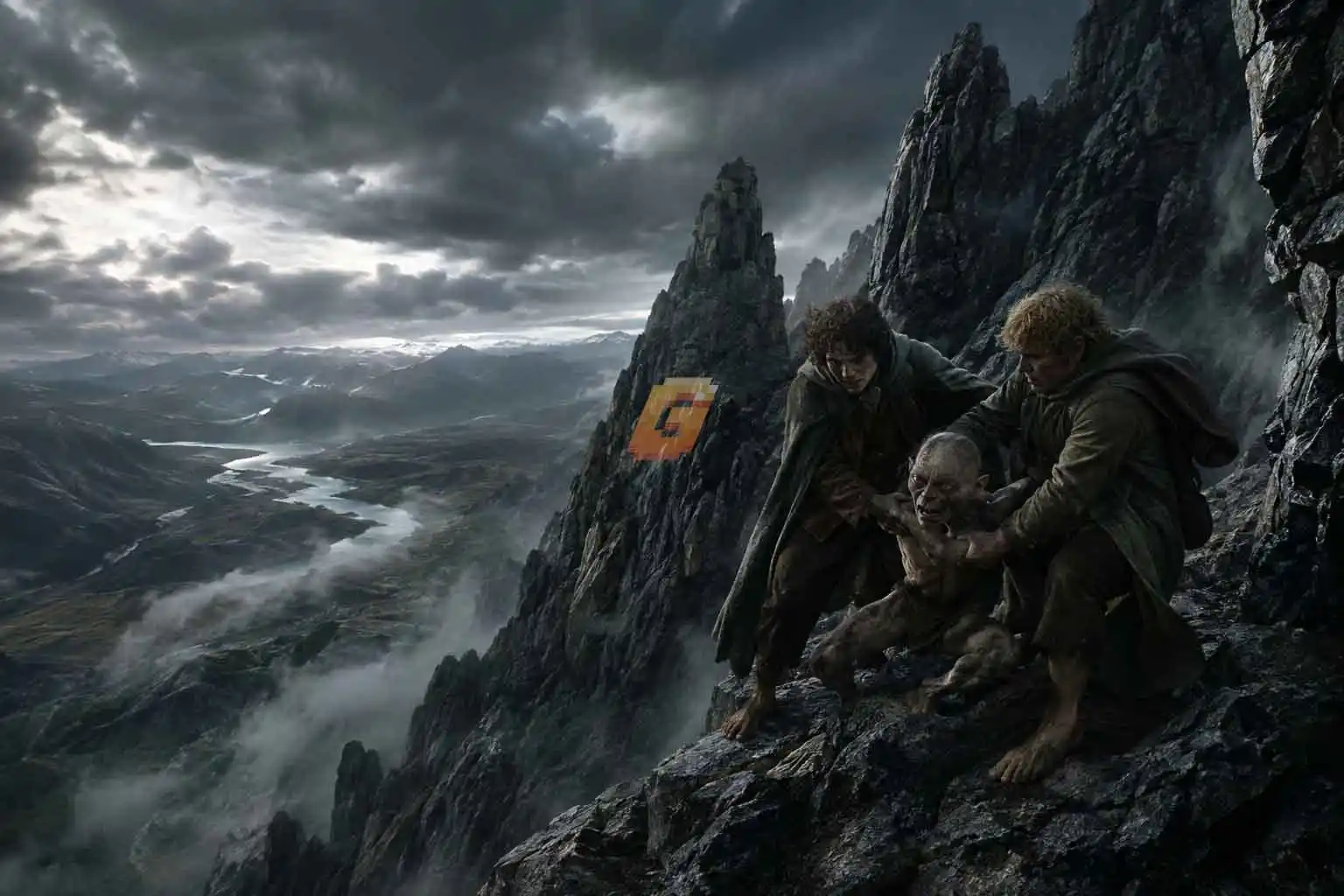
Frodo and Sam are lost in the harsh, maze-like hills of Emyn Muil. They’re trying to find a way down toward Mordor and feeling the weight of the Ring. Gollum has been trailing them, driven by his obsession with the Precious.
When they finally catch him, he’s mid-attack, slippery and dangerous. Sam is ready to end it. Frodo steps in.
They tie him up with the Elvish rope that stings Gollum badly. The scene is uncomfortable and intimate. No grand battle — just three small figures in a vast, empty landscape.
This moment stands apart because it’s Frodo and Sam’s own test. No one else is there guiding their hands. Unlike Bilbo, who showed Gollum mercy from a distance while slipping away unseen, Frodo and Sam are doing this with Gollum pinned down in front of them, having to decide his fate on the spot. It’s their call in the wild.
Small details from the scene — the rope, the cliffs, the endless rock — underline just how desperate their situation really was.
Why Frodo Chooses Pity Over the Blade
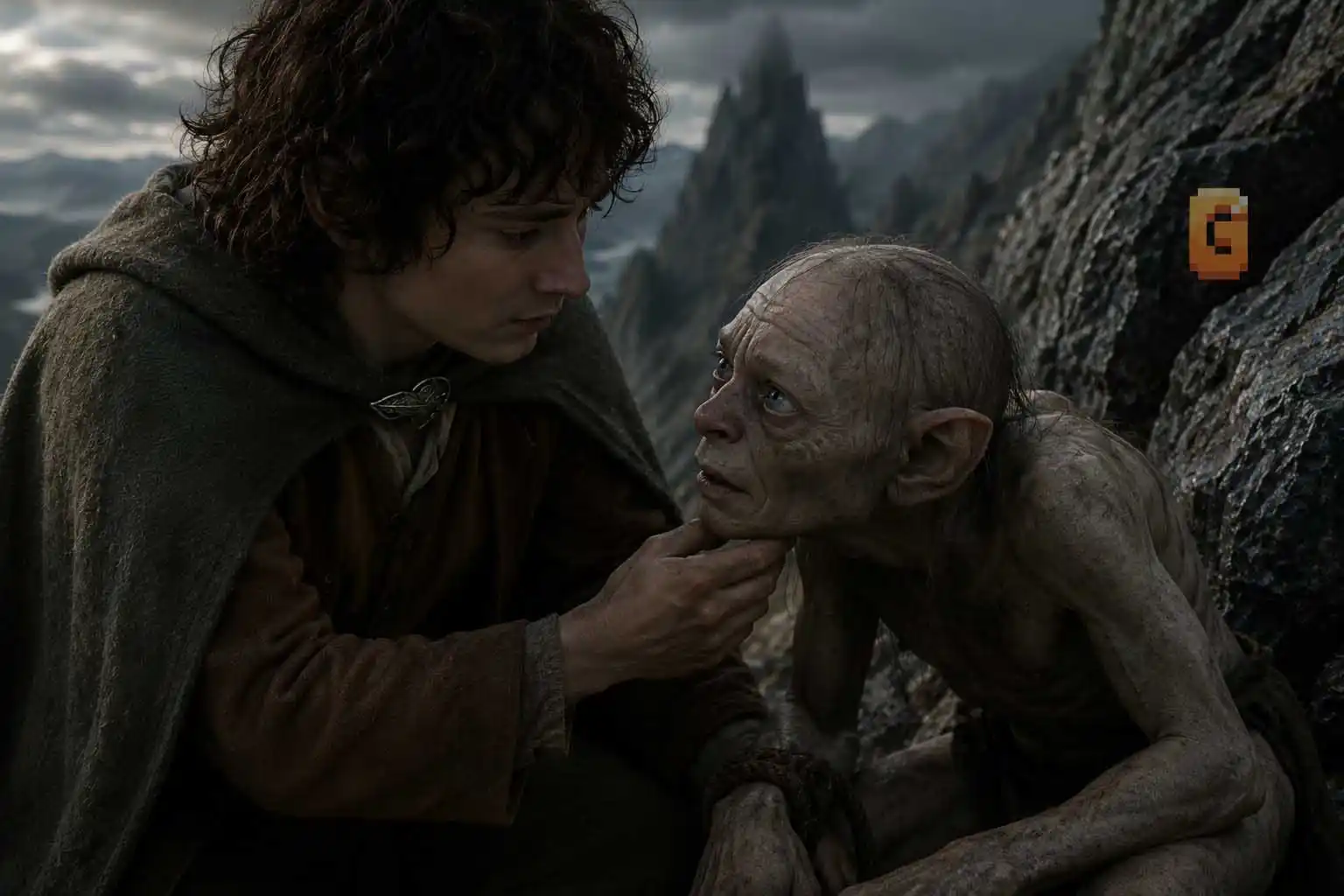
Frodo looks at Gollum and sees something hauntingly familiar. This twisted creature was once Sméagol, a hobbit-like being whose life was ruined by the Ring. Frodo, carrying that same Ring, feels the pull and understands how it corrupts. That corrupting power goes all the way back to how the Ring was forged and first lost — our breakdown of the War of the Last Alliance covers how Sauron’s original defeat set this whole chain of events in motion.
Pity wins.
He thinks back to something Gandalf once told him — that it’s not always wise to decide who deserves to keep living, because even the wisest people can’t see how things will turn out.
This isn’t soft sentiment. It’s a deep recognition of shared vulnerability. This theme — pity for Gollum, first from Bilbo and now from Frodo — runs through the whole trilogy, but here it becomes intensely personal for Frodo and Sam in their own high-stakes moment.
Why did Frodo spare Gollum? Because in that second, killing him would have felt like killing a broken version of himself. That empathy shapes everything that follows.
Gollum Is the Only Guide They Have
Mercy gets all the attention in most discussions, but there’s a colder, practical side too.
Frodo and Sam have zero clue how to navigate out of Emyn Muil, cross the Dead Marshes, or approach the Black Gate safely. The terrain is brutal. They’re exhausted, low on supplies, and heading into enemy land.
Gollum knows these paths. He’s been to Mordor. Killing their only local expert would leave them stranded and probably dead.
Why does Frodo need Gollum as a guide? Because the alternative is wandering blind in one of the most hostile regions imaginable. Practical survival demanded keeping him alive.
This part of the decision feels very human. It’s not just noble — it’s smart. They turn a threat into an asset.
The Oath on the Precious, Explained
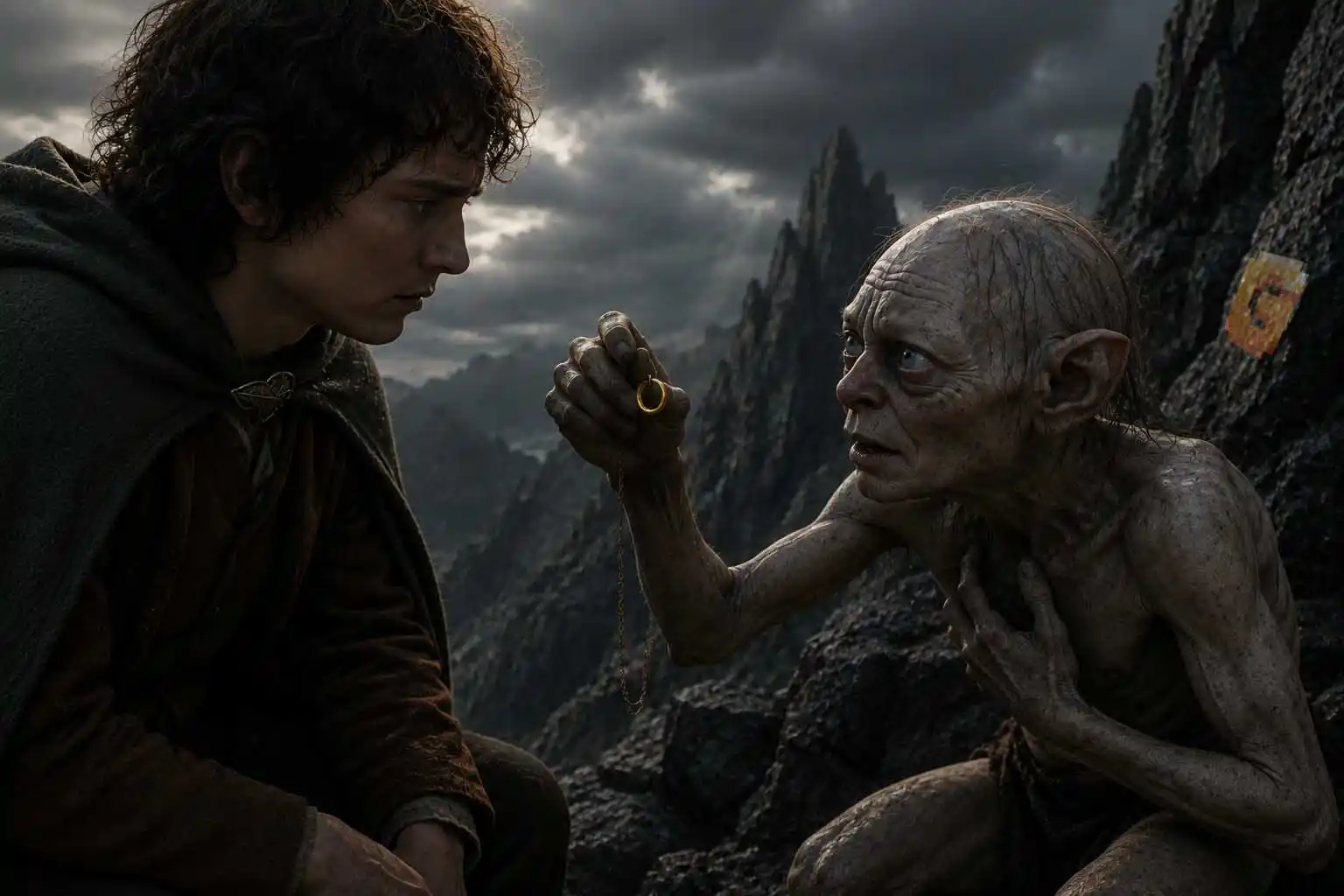
Once they decide to spare him, Frodo doesn’t just ask for help. He makes Gollum swear an oath on the Precious itself.
Gollum binds himself to serve the master of the Ring. That oath carries real weight because the Ring is the one thing that truly controls him. It’s not a casual promise. It’s a magical-adjacent binding tied to his deepest obsession.
Why does Gollum swear on the Precious? Because Frodo uses the very thing that dominates Gollum’s mind against him. The oath keeps Gollum mostly in line for a long stretch of the journey, even when his treacherous side tries to break free.
This mechanic adds real tension. The oath isn’t foolproof, but it gives Frodo leverage and turns Gollum into something like a reluctant companion.
How This Choice Saves the Quest at Mount Doom
Fast forward to the Cracks of Doom. Gollum’s betrayal feels inevitable, yet his earlier guidance gets them there. The paths he shows them matter. The mercy shown at Emyn Muil creates the conditions for the Ring’s ultimate destruction — in a way no one could have planned.
Gollum bites off Frodo’s finger, falls into the fire, and the Ring is destroyed. Without the earlier decision to spare him, the journey would have looked very different. The theme echoes: mercy ripples outward in ways brute force never could.
Why This Scene Matters
The Hunt for Gollum is filming right now in New Zealand, with Andy Serkis directing and starring as Gollum while Elijah Wood returns as Frodo. That puts fresh eyes on this exact Gollum arc.
Suddenly Emyn Muil isn’t just a favorite book scene — it’s part of the same Gollum story a new wave of moviegoers is about to discover, even if Serkis’s film covers the years before this moment rather than the moment itself.
Readers still debate this scene because it refuses easy answers. Should they have killed him? The books say no, and the payoff proves it right in the end.
This single decision at first direct contact ripples through the entire story and delivers the Ring’s destruction.
Frodo balanced pity with hard practicality. They gained a dangerous but necessary guide. And they created a binding that kept possibilities open until the very end on Mount Doom.
The quiet choice on those rocky cliffs carries more weight than most epic battles. Stories like this keep rewarding rereads because the reasons behind the mercy go deeper each time you visit them.
References
Tolkien Gateway – https://tolkiengateway.net/wiki/Emyn_Muil
The Lord of the Rings: A Reader’s Companion by Wayne G. Hammond and Christina Scull
LOTR Project – http://lotrproject.com/timeline/#zoom=2&lat=-1485&lon=1500&layers=B